Basement Home Theater in Cincinnati, OH
Basements make good theaters because they are already dim and have concrete on most sides. A local contractor referred by Cincinnati Basement Finishing builds the room so the cables, outlets, speaker backing and sound insulation are in place before drywall, which is the only cheap moment to do it.
- A local contractor visits and prices the job, free
- Water and radon looked at before anything is built
- The contractor takes care of permits and inspections
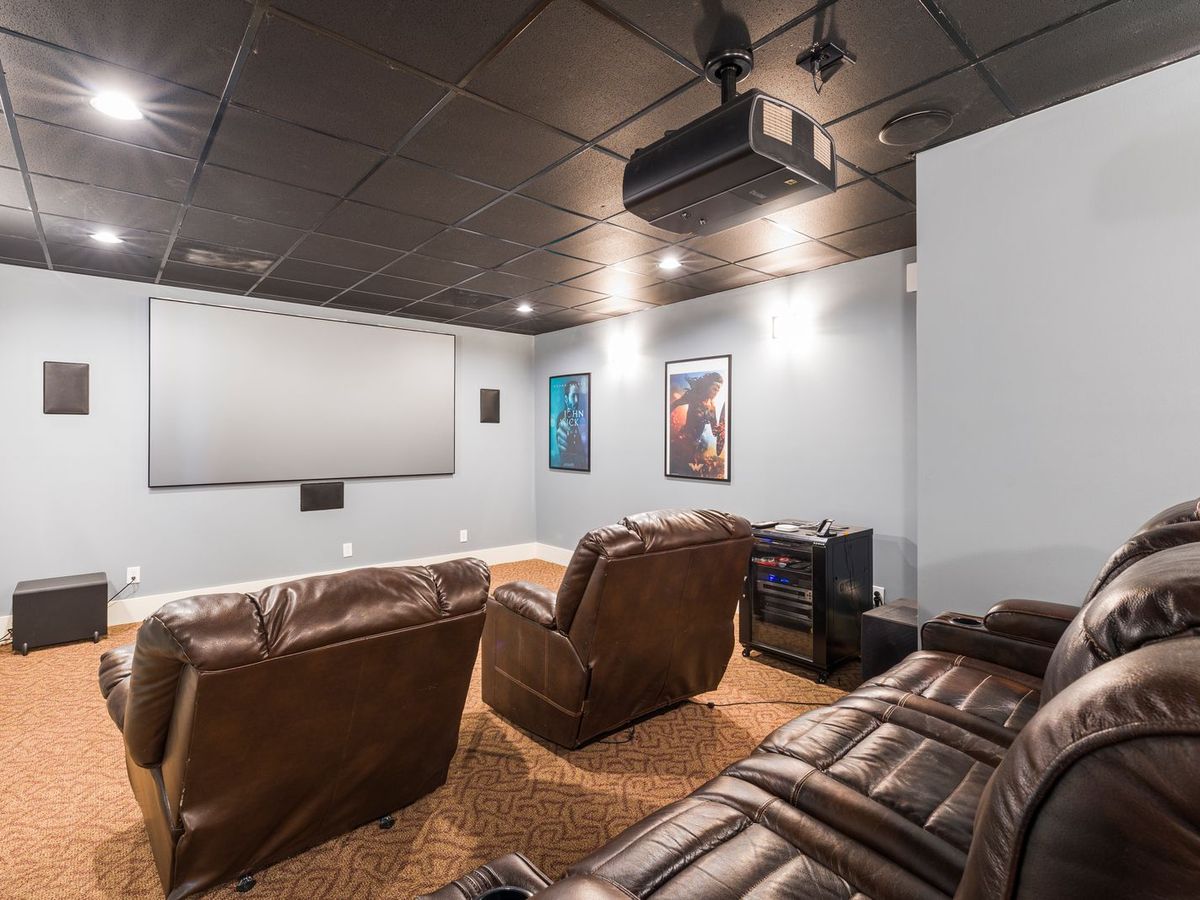
Get the shape of the room right
A theater works best in a rectangle with the screen on a short wall and no door or window beside it. Before framing, the contractor will want to know:
- How many seats, and whether there will be one row or two.
- Screen size. A common rule of thumb is to sit at a distance of about one and a half times the screen's width, but taste varies.
- Where the equipment lives. A ventilated closet or cabinet keeps heat and fan noise out of the room.
Keeping sound in, and noise out
Sound travels through air gaps and through the structure. Each of these helps, and they work best together:
- Insulation packed between the ceiling joists and in the walls.
- Extra mass. Two layers of drywall, sometimes with a damping compound between.
- Isolation. Clips and channels that stop the drywall touching the joists directly.
- Sealing. A solid-core door with seals, and caulk around every box and pipe.
- Lined ducts, so sound does not ride the ductwork upstairs.
It also runs the other way: the furnace, sump pump and footsteps above are noises you may want kept out.
Wiring to put in while walls are open
- Conduit from the equipment location to the screen, so cables can be replaced later.
- Speaker cable to each planned speaker position, including the ceiling.
- Network cable to the equipment rack.
- Separate circuits for the equipment and for lighting.
- Wall blocking where a television, screen or speakers will be mounted.
Light and seating
Dimmable recessed lights, plus low step or sconce lighting, let people move around mid-film. A second row needs a platform, which uses headroom, so measure the ceiling first. Dark, matte wall colors improve the picture.
A theater often shares a basement with a bar. We have no sourced price range for theaters; equipment choices alone vary widely.
How it works
Describe the basement
Five short questions on this site.
We pass it on
Your request goes to a basement contractor who works in your part of the Cincinnati area.
They visit
The contractor measures up, listens to what you want and writes up a price.
You choose
Accept it, ask for changes or say no. Nothing is owed for the estimate.
Basement Home Theater FAQs
How much sound can be kept in the room?
A great deal, though never all of it. Dense insulation overhead, drywall hung on sound-isolating clips, a solid door and sealed gaps each cut noise. Low bass is the hardest part to contain.
Should we plan for a projector or a television?
Projectors want a dark room and a clear path from lens to screen. Televisions are brighter and easier in a room that doubles as a family room. Choose early, because it changes where power, cables and wall blocking go.
Other services
Basement Remodeling
A new layout, new surfaces and updated wiring for a basement someone finished years ago.
Learn moreBasement Bathroom Addition
A powder room or full bath downstairs, with the drainage worked out first.
Learn moreBasement Bedroom
A proper bedroom below the main floor, with the exit, headroom and alarms that make it legal.
Learn moreEgress Window Installation
An escape-size window and well cut into the foundation, for safety and for daylight.
Learn moreBasement Bars & Wet Bars
Anything from a counter with stools to a plumbed bar with sink, fridge and taps.
Learn moreBasement Home Gym
A room for weights and cardio with a tough floor, moving air and headroom where it counts.
Learn moreBasement Home Office
A place to work with a door that shuts, decent light and a reliable connection.
Learn moreBasement Kitchenette
A small second kitchen for game nights, guests or a family member living downstairs.
Learn moreBasement In-Law Suite
Bedroom, bath, sitting room and kitchenette together, so a relative can live independently.
Learn moreBasement Flooring
Flooring picked for concrete and occasional damp, with the right layer underneath.
Learn moreBasement Ceilings
Drywall, suspended tiles or painted joists, weighed against headroom and reaching the pipes.
Learn moreBasement Waterproofing
Getting a basement dry, and proving it is dry, before money goes into finishing it.
Learn moreBasement Framing & Insulation
The hidden structure of a finished basement, built so the room is warm and stays dry.
Learn moreBasement Playroom
Room for children to spread out, finished to take a beating and to change as they grow.
Learn moreAreas we serve near Cincinnati, OH
Cincinnati Basement Finishing serves Cincinnati, OH and surrounding communities, including Norwood, Wyoming, Madeira, Blue Ash, Forest Park, Milford, Springdale, Montgomery, Sharonville, Fairfield, Loveland, West Chester, Hamilton, Mason and Lebanon.